The Burning of St. John's Plantation
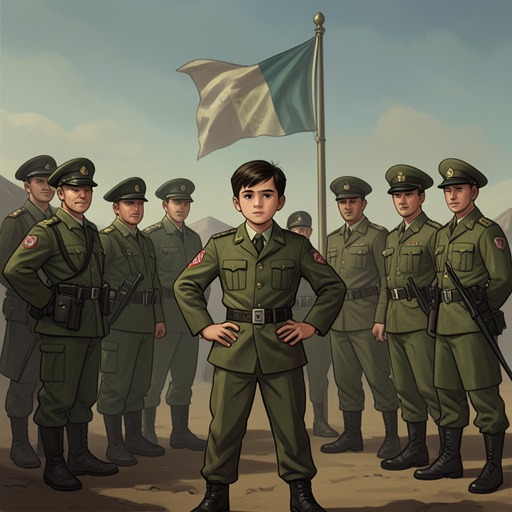
Young Captain Jack · The Son of a SoldierThe Burning of St. John's Plantation is the episode in which a military retreat leaves the Ruthven plantation exposed to fire and disorder, while Jack Ruthven converts a frightened crowd into an organized firefighting force. Its decisive significance lies in the contrast between destruction brought by war and the deliberate labor required to preserve civilian property, wounded men, and household continuity. Jack’s leadership is not abstract heroism: it is measured in ladders, buckets, water lines, an axe, and the endurance required to remain at the roof until the last spark is out.
Causes and Wartime Setting
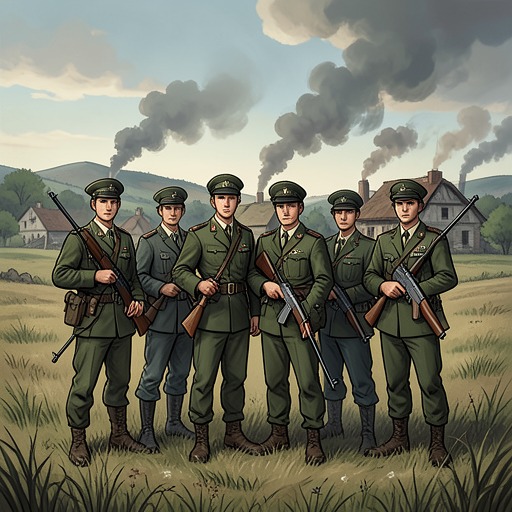
The fire occurs during a larger military movement around Oldville, the district where the Ruthvens’ plantation stands. Confederate soldiers leave the plantation, and Federal soldiers then come into view while cannon fire continues. The retreat changes the house’s status from a protected domestic and medical space into a vulnerable point within an active conflict. Earlier, Jack had insisted that the property was private and that the house served as a hospital for six wounded Confederates under the care of a surgeon. That claim places the crisis within a sharp wartime boundary: the plantation is connected to military events, but it is not thereby legitimate spoil for every armed group passing through it.
The episode also gains force from the presence of irregular violence. A company of guerrillas follows the cavalry at a distance, described as men who fight for the sake of looting afterward. Their presence supplies the broader moral counterpoint to the defense of the plantation. The story distinguishes between soldiers moving through a campaign, wounded men receiving medical care, household residents trying to protect their home, and opportunists who treat war as permission to seize property. The later discovery of stolen goods and the black-painted tin box from the Nautilus wreck in the outlaws’ camp confirms that this distinction is not merely rhetorical: plunder is an active danger in the surrounding landscape.
The Fire and the Emergency Response
As the soldiers leave, smoke rises from the plantation, and flames break out in several directions. Jack and his followers reach the roadway in front of the plantation and confront the fire as an immediate physical emergency rather than as a distant consequence of battle. Jack runs to the house and meets Mrs. Mary Ruthven on the veranda. He directs her to gather every pail and bucket available and asks whether a ladder is at hand, reducing the crisis to the supplies and access points that can determine whether the roof survives.
Jack and several members of the Home Guard go to the barn and bring out two ladders: one short and one long and heavy. He establishes a line to the cistern, assigns the boys their places, and works with the colored servants as water is passed upward and thrown onto the burning roof. The response is communal but not spontaneous. Jack supplies the structure, while the boys and servants turn his instructions into a continuous chain of labor. The breeze helps the flames spread, making speed essential, and the fire remains lively even as the defenders work.
The struggle becomes especially demanding at the roof. Jack stays on the long ladder until he is almost exhausted, knowing that if he stops the fire may gain control. When the flames finally weaken at one corner, the workers shift their attention to the area above the veranda, where fire has eaten beneath the gutter. Jack’s method then changes from pouring water onto the surface to opening the roof so that water can reach the hidden flames. When St. John Ruthven orders him not to touch the roof with an axe, Jack explains that a hole is necessary to pour water onto the fire. The exchange makes the episode a conflict between obstructive authority and practical judgment: St. John issues a command, but Jack’s knowledge of the fire’s location determines what action can actually save the building.
Jack chops through the roof while the others bring as much water as possible. The breakthrough comes when Larry announces that the fire is under control. Within a quarter of an hour, the last spark is extinguished, and Jack crawls to the ground almost too weak to stand. The victory therefore carries a visible cost. The house is saved from complete destruction, but the effort leaves its principal organizer physically spent, while the water used in the rescue has made an awful mess inside.
Property, Hospital, and Household Conflict
The plantation is more than a private residence in this scene. It is also a hospital containing six wounded Confederates, which gives the defense a humanitarian dimension. Protecting the house protects a place where incapacitated soldiers are being treated, regardless of the shifting military control outside. Jack’s earlier insistence on private-property protection and the hospital’s status frames his conduct during the fire: he is defending a civilian and medical refuge rather than claiming the house as a partisan stronghold.
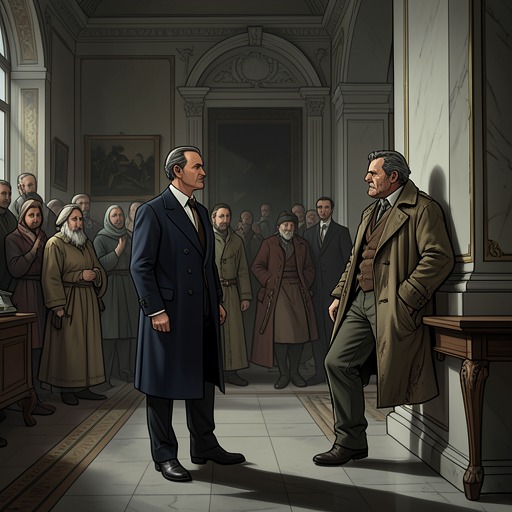
The household’s reactions reveal a second conflict beneath the physical emergency. Mrs. Ruthven remains inside, packing valuables so that she can leave if necessary, while Jack and the firefighting party stay exposed to the flames. Her preparation acknowledges that the plantation may still become untenable even if the roof can be saved. St. John Ruthven, by contrast, complains about the damage caused by the water, declaring that the defenders need not have drowned out the whole house. Mrs. Ruthven answers severely that she is thankful the fire is out, then turns to direct the servants in clearing the mess. Her response establishes the episode’s scale of values: damaged furnishings and disorder are tolerable consequences; the destruction of the house and the loss of a hospital are not.
The scene also gives the Home Guard a practical local function. Its members do not appear as a formal army replacing the larger forces outside; they act as a protective body rooted in the plantation and its immediate community. Their work joins the boys and the servants in a common emergency, even though the surrounding war is organized through larger divisions between Confederate and Federal forces. The plantation’s survival depends on this local cooperation rather than on the armies that have just passed through it.
Consequences and Narrative Significance
The immediate consequence is that the fire is extinguished and the plantation remains standing, though its roof and interior suffer damage from both flame and the water poured into the house. Jack emerges from the episode as the person whose decisiveness converts danger into a solvable sequence of tasks. His authority is earned through action: he identifies what is needed, assigns labor, changes tactics when the fire moves beneath the gutter, and continues after exhaustion would have made withdrawal understandable.
The episode also sharpens the contrast between Jack and St. John Ruthven. Jack treats the endangered house as a responsibility demanding labor; St. John objects to the mess created by the rescue and attempts to halt the necessary cutting of the roof. The disagreement is not simply personal friction. It dramatizes courage against passivity and useful command against rank without practical judgment. Mrs. Ruthven’s severe defense of the firefighters reinforces Jack’s position and makes the preservation of the house the accepted measure of success.
As part of the larger narrative, the burning belongs to a chain of threats surrounding the plantation, the war, and the hidden history connected with the wreck on Hemlock Bluff. The wreck first appears as a place bound to a long, unexplained story; clothing, a lace handkerchief, and a ring preserve traces of an unidentified woman; and a heavy black-painted tin box is later recovered from the wreck’s dirt-filled closet. After Jack and his companions endure two days of brutal captivity in a guerrilla cave, the outlaws’ camp is searched and the stolen tin box is found among other goods, eventually being handed to Colonel Stanton. The plantation fire does not itself resolve these mysteries, but it belongs to the same structure of danger in which war repeatedly exposes homes, people, and evidence to seizure or destruction.
The scene’s deepest movement is from instability toward provisional order. Armies cross the property, smoke and flame threaten to erase the household’s material base, and conflicting voices dispute what should be done. Against that pressure, Jack builds a temporary civic order out of cooperation: the Home Guard brings ladders, the boys carry water, the servants help place the equipment, and the house survives because each role is sustained. The fire therefore functions as both a military consequence and a character-defining ordeal. It shows that in a world where authority is divided and property is endangered, preservation depends on disciplined courage and on recognizing what must be saved before concern for damage, status, or convenience.